
The Novel’s Women and Male Desire
In Search of Lost TimeThe narrator’s pursuit of women moves among imagined beauties and brief encounters, revealing how desire often attaches to a projection rather than to a fully known person.
increasing Bearing strength in each event
 decreasing
Bearing strength in each eventdecreasingThe Ideal Stranger

Desire Without a Face
Two imagined women
Saint-Loup describes a socially distinguished girl and a maid he believes the narrator could meet. The narrator’s imagination fuses them into available possibilities.
Desire as abstraction
He longs for the promise of beauty without knowing either woman’s character. Names and categories temporarily substitute for intimacy.
A Chance Encounter on the Train
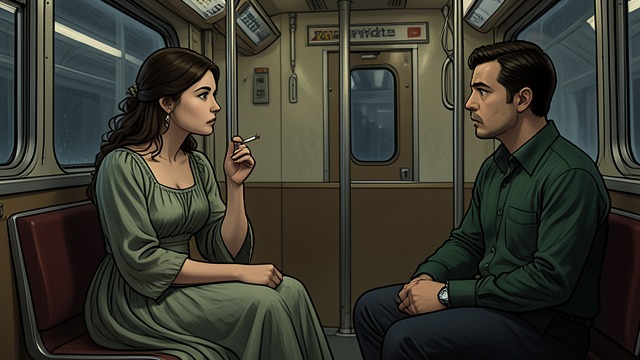
The Girl with the Cigarette
A brief meeting
A striking young woman joins the little train, speaks to the narrator, and leaves after a few stations. He never learns her identity.
An enduring phantom
The encounter remains powerful precisely because it is incomplete. Time cannot restore the girl’s youth or the possibility of meeting her again.
The Beach Beauties
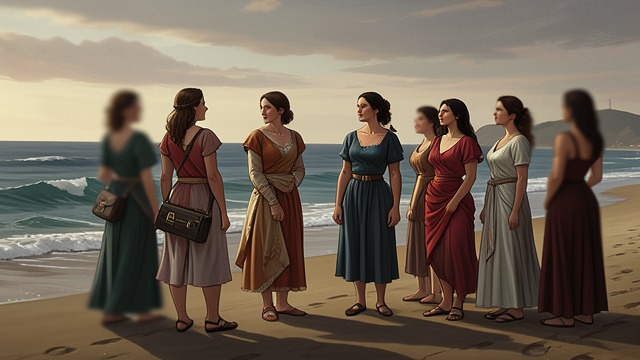
Faces Made by Expectation
Looking for strangers
The narrator watches girls on the beach and imagines what they might be like. Their apparent beauty changes with distance, dress, and his own mood.
Desire reshapes perception
The hoped-for woman often disappears on approach. The narrator discovers that expectation supplies much of what he thinks he sees.
A Moment of Boldness

Alcohol Bridges Desire and Action
A self-imposed remedy
After drinking several glasses of port, the narrator finds it easier to approach a girl. Alcohol temporarily removes his hesitation.
The fantasy is not mutual
The girl has not shared the drink or the dream. His confidence shows how desire can mistake an inward change for a shared possibility.
The Pursuit Repeats
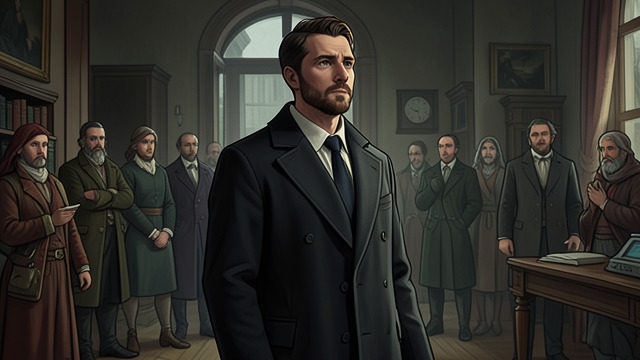
New Objects, Familiar Longing
Recurrent desire
The narrator moves from Gilberte to the Guermantes and then toward Albertine, with other imagined women passing between them. Each attachment feels singular while it lasts.
A pattern recognized
He begins to see that he pursues phantoms shaped by his own desires. The person changes, but the structure of longing remains.
During the drive home from the Guermantes reception
During the journey to La Raspelière
During the early Balbec season
During a solitary afternoon at Balbec
Across the narrator’s changing attachments
